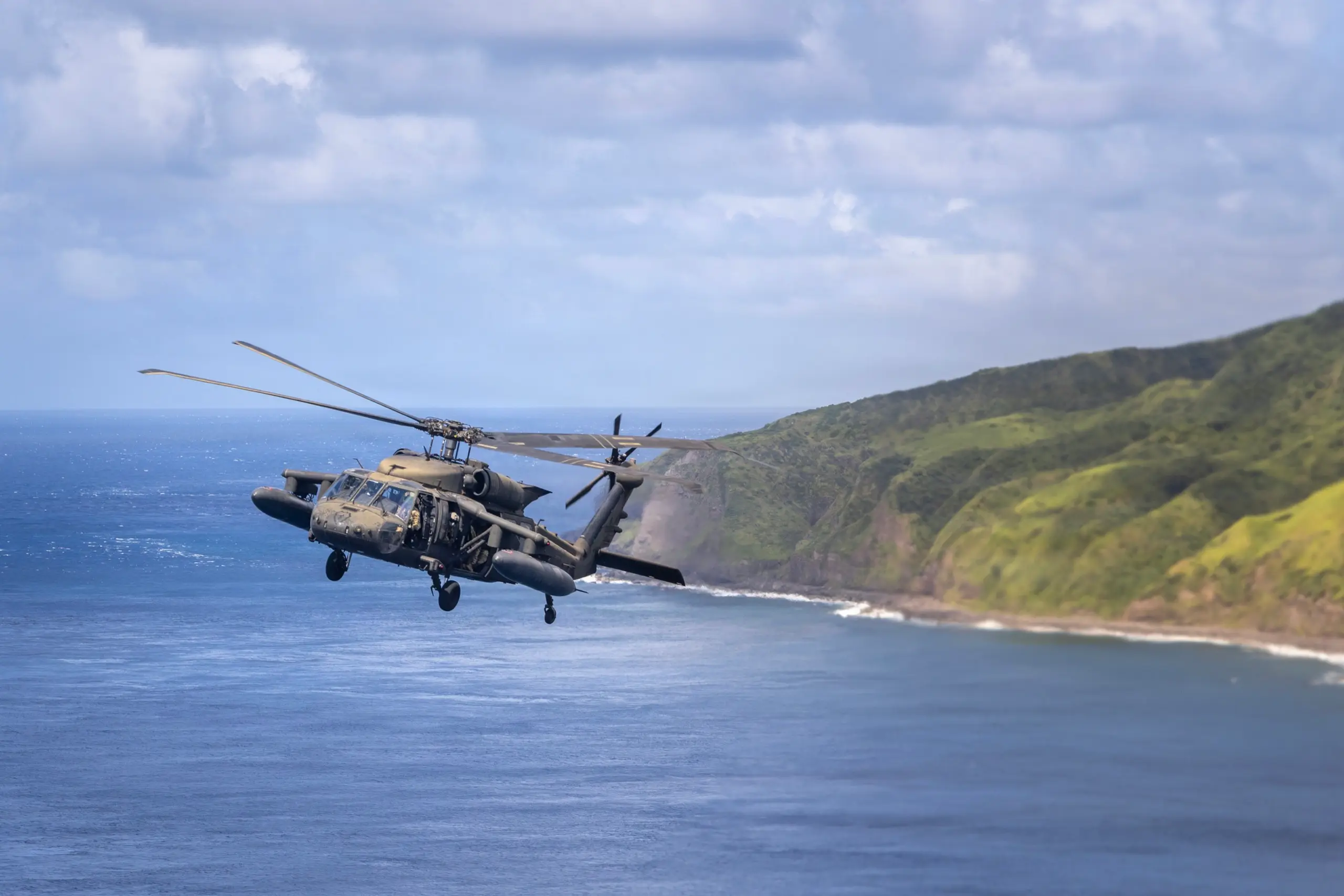
On 25 October 1983, the Black Hawk’s first day in combat, every one of the helicopters that flew against Richmond Hill prison in Grenada was hit. That night the flight landed in Barbados, short of fuel and full of holes. The Army had asked for exactly that. In Vietnam it had learned that helicopters get shot at, a lot, and it wanted a Huey replacement that could carry a full infantry squad, fit inside a transport plane, shrug off bullets and keep its crew alive in a crash. Sikorsky’s answer first flew in 1974: long and low, with two engines, armoured seats and a cabin designed to stay in one piece.
It has been the Army’s workhorse ever since. For American soldiers since the 1980s, the deep, thumping beat of a Black Hawk coming over the hill has meant a ride into a fight, or more water and ammunition, or a medic on a cable. It carried the 101st Airborne deep into Iraq in 1991. It flies medevac with red crosses on its doors, fights wildfires and hauls artillery under its belly, and for decades a green-and-white version carried the President of the United States.
Its name became known far beyond the Army after one afternoon in Mogadishu, on 3 October 1993, when two Black Hawks were shot down and a whole city fought over their crews.
There is a quieter side to the story. In 2011, two modified Black Hawks carried US Navy SEALs to Osama bin Laden’s hideout in Pakistan. One crashed inside the walls. The tail survived the demolition charge, and the photographs of it gave the world its first look at a stealth Black Hawk.
More than 5,000 have been delivered to over 36 nations, and they have flown more than 15 million hours. The newest models have digital cockpits, one test aircraft has flown with nobody on board, and the US Army plans to keep flying them into the 2070s, a century after the prototype first lifted off at Stratford.