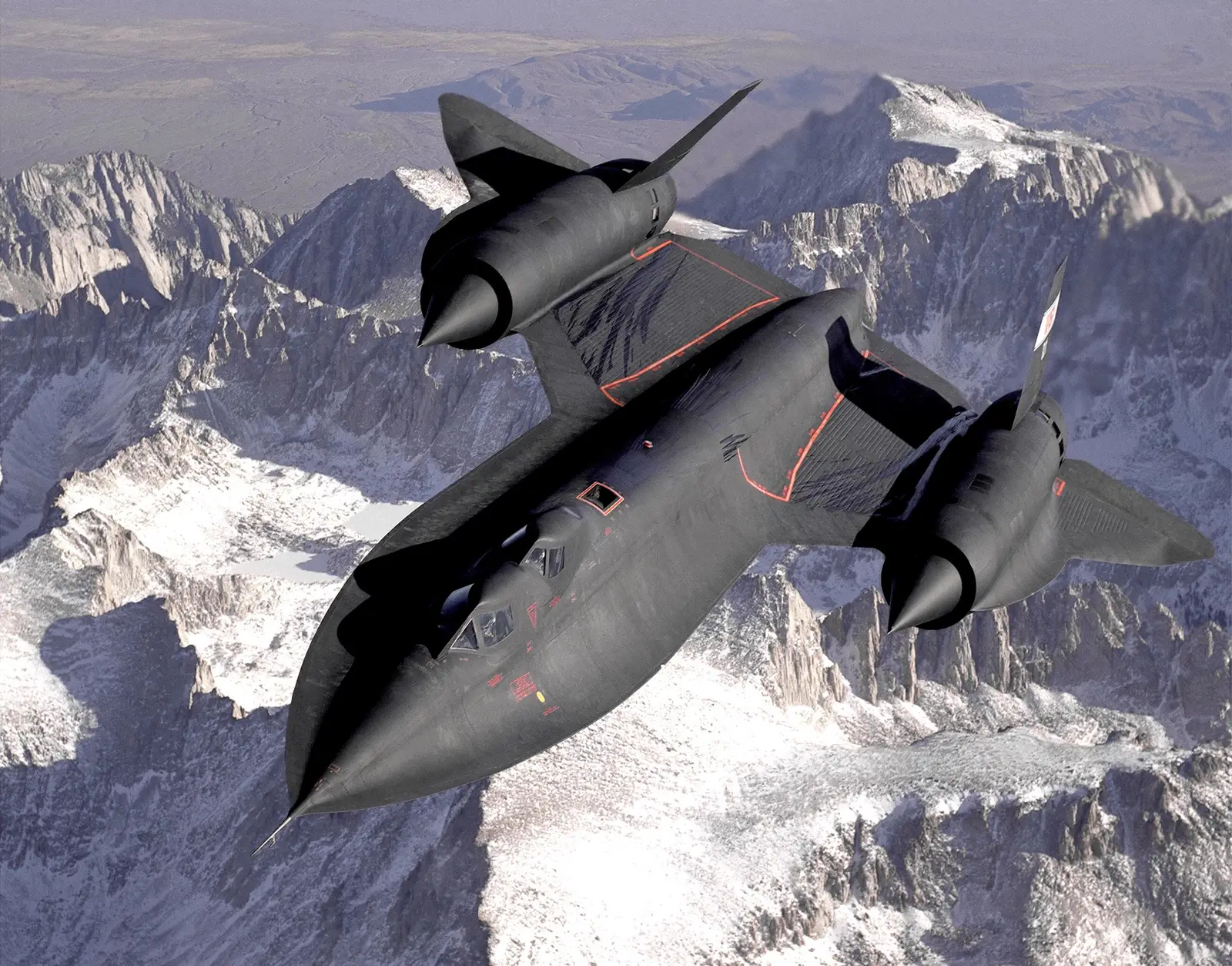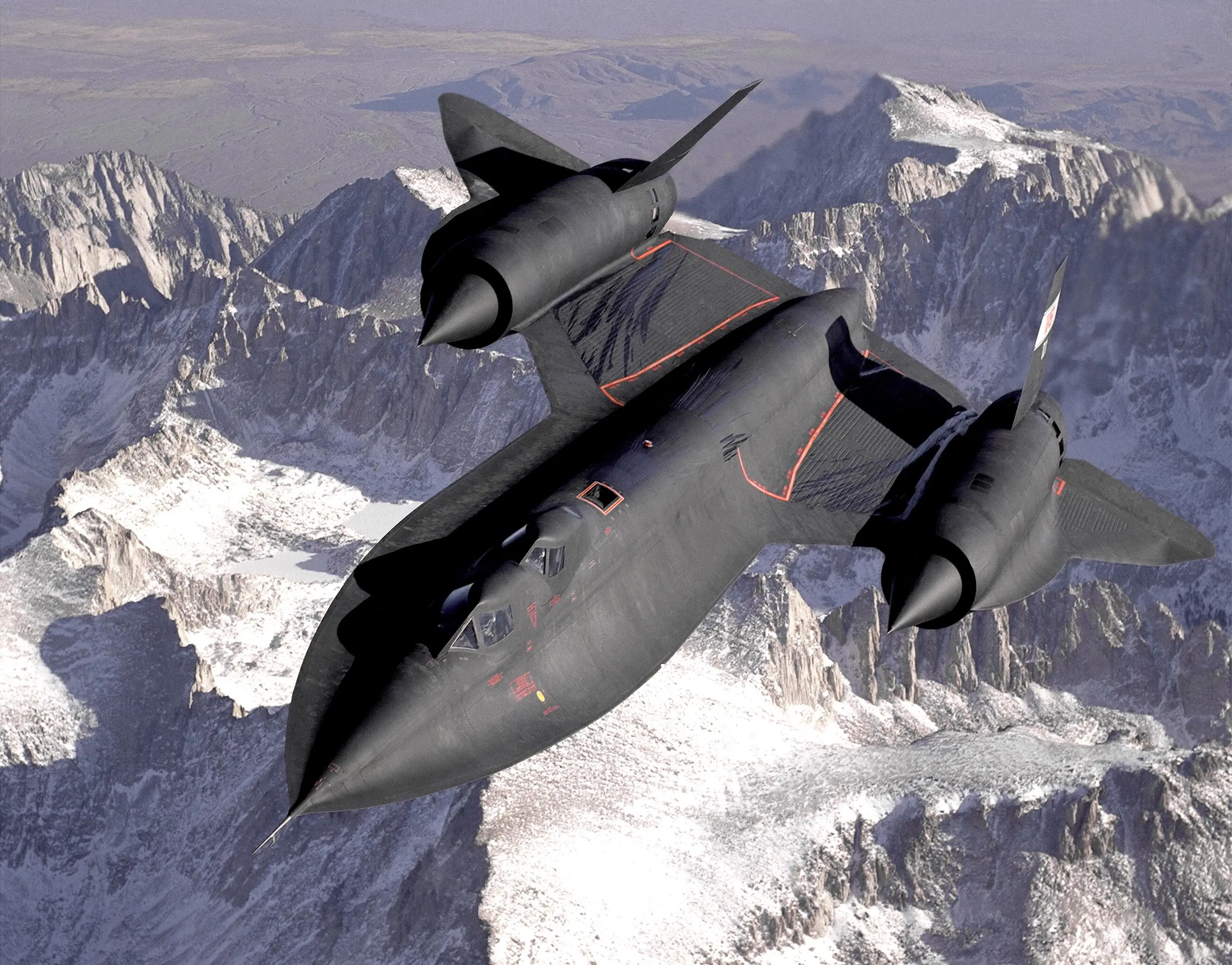
Here’s the thing you need to understand about the SR-71: it didn’t dodge enemy fire. It didn’t shoot back, and it didn’t pray. When a surface-to-air missile came screaming up to kill it, the Blackbird’s evasive maneuver was to push the throttles forward and leave the missile behind. The Air Force says more than 4,000 missiles were fired at SR-71s over their career. Number of hits: zero. You don’t armor a getaway car. You just make it faster than everything chasing it.
Built in secret by Lockheed’s legendary Skunk Works and masterminded by Kelly Johnson, the SR-71 first flew in 1964 — and here’s the part that breaks people’s brains — it still holds the world speed record for a jet-powered aircraft: 3,529 km/h, set in 1976. We designed this thing with slide rules, and half a century later, nobody has beaten it.
It cruised at Mach 3.2 and above 24,000 metres — so high the two-person crew wore full pressure suits much like an astronaut’s, and could see the curvature of the Earth. At that speed the air itself became an enemy: compression and friction heated the skin to around 315°C, and the whole airframe grew by several centimetres in flight. So engineers built it to fit together loosely on the ground and tighten up in the heat of flight. The catch? Its fuel tanks couldn’t fully seal while it sat still — so a parked Blackbird routinely dripped fuel onto the ramp. It was built for Mach 3 so completely that it barely made sense at zero.
Oh, and the beautiful irony: it’s built almost entirely of titanium — and one of the world’s biggest titanium suppliers was the Soviet Union. According to Skunk Works chief Ben Rich, the CIA quietly used third-party countries and dummy companies to buy Soviet titanium… to build the planes that would spy on the Soviet Union.