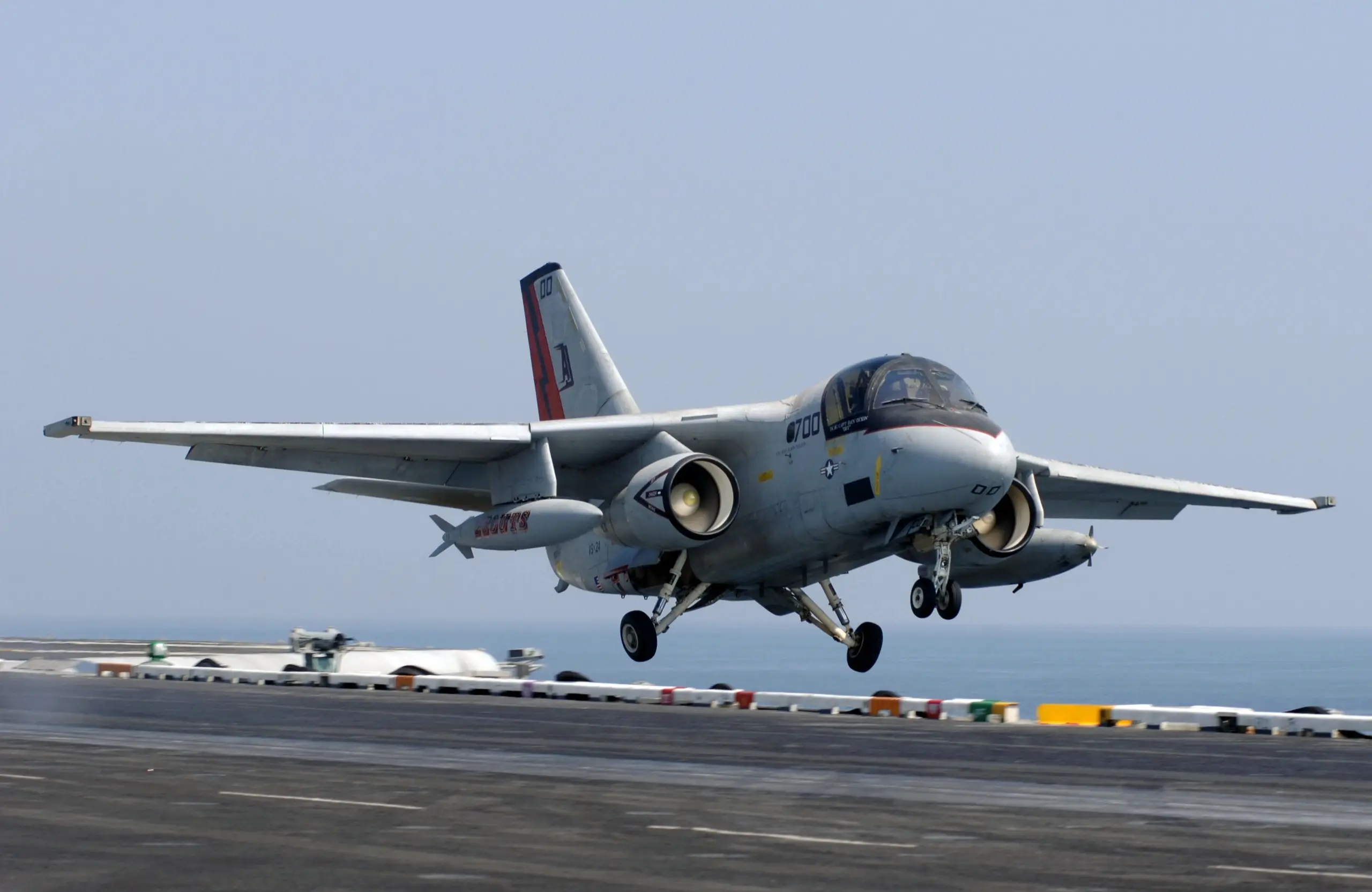
For its first decade and a half, the S-3 Viking existed to empty the sixty sonobuoy chutes in its belly. A crew would launch from a carrier, run out ahead of the fleet on two turbofans and scatter listening buoys across the sea, while a computer in the back sorted the noise of the ocean from the noise of a Soviet submarine. Until then the Navy had hunted from its carriers with the S-2 Tracker, a piston-engined machine designed before nuclear submarines went to sea in numbers.
Lockheed won the job having built only one carrier aircraft before, so it borrowed the know-how from LTV Aerospace, the old Vought company. Between them they put four people in a compact, high-winged jet with a computer at its heart. Crews nicknamed it the Hoover, after the vacuum-cleaner whine of its General Electric engines.
After the Cold War the Viking became a tanker, a surface hunter, a minelayer, an electronic eavesdropper (as the ES-3A) and, in 2003, an attack aircraft firing Maverick missiles. One became the only aircraft the Navy has ever called Navy One. Ray Burick, the Lockheed vice president in charge of the programme, called it the Swiss Army knife of naval aviation.
The Navy took the Viking off its carriers in 2009 to cut down on aircraft types, and still it kept flying. A test squadron kept a few until 2016, and NASA flew one out of Cleveland for another five years, writing the rules for drones in US airspace and photographing algae on Lake Erie. That last one landed at a museum in California in 2021, nearly half a century after the first flight, grounded in the end by a shortage of spare parts.


