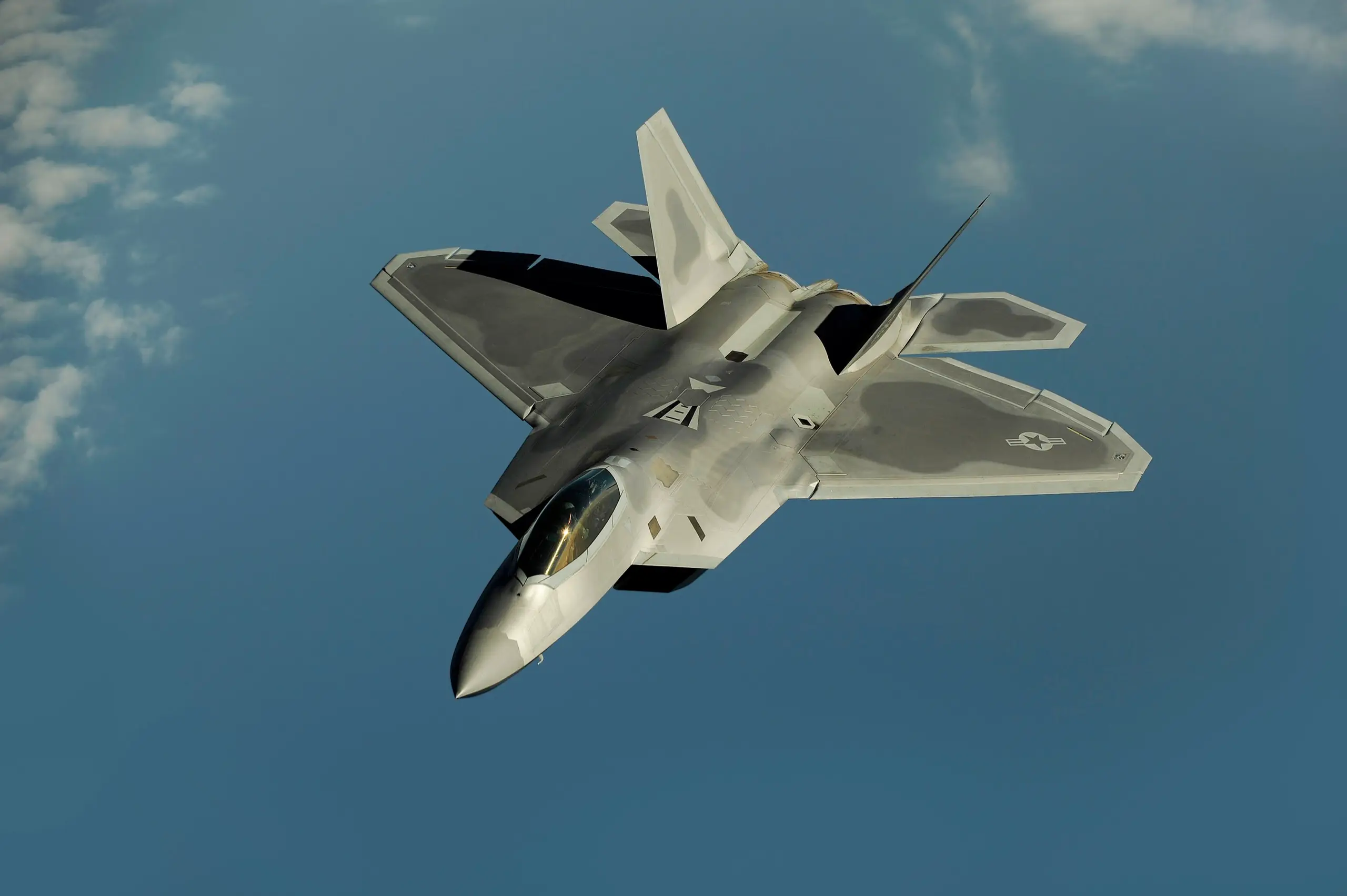
The underside of an F-22 is smooth. Nothing hangs from the wings; the missiles ride inside the belly behind closed doors, so they don’t spoil the shape, and the shape is there to scatter radar energy. Inside, the computers take what the radar and the other sensors see and fuse it into one picture for one pilot. All of it serves one purpose, which is to settle the fight before the other side knows it has started. By the time an enemy realises a Raptor is around, the missile is usually already on its way.
It was conceived in the last years of the Cold War, when the US Air Force went looking for a new air superiority fighter to replace the F-15. Lockheed’s YF-22 won a fly-off against Northrop’s YF-23 in 1991, and the production jet first flew in 1997. It brought something no fighter had really mastered before: supercruise, flying faster than sound without burning fuel in the afterburners. Its engine nozzles swivel too, so the jet can point its nose with thrust alone.
By then the Cold War was over and the budget battles had begun. In 2009 the Pentagon capped the fleet at 187 combat jets. The 195th and last Raptor rolled out of Marietta, Georgia, in 2012, and the production line closed for good. The Raptor has never been sold abroad, so every one flying today wears US Air Force markings.
For its first nine years in service the Raptor never went to war. Then came Syria, in 2014. Its first air-to-air kills came in February 2023, and none of the targets was an aircraft: a Chinese spy balloon off South Carolina, then two more unidentified objects over Alaska and Canada within the week.
As of 2026, 184 Raptors are still in service. The Air Force has asked to retire its oldest training jets, Congress keeps saying no, and the new F-47 is expected to start taking over in the 2030s. Until then the job stays with the Raptor.