The last C-17 rolled out of the factory in Long Beach, California, on 29 November 2015, and the plant closed behind it. In 24 years that building had turned out 279 of them, 223 for the US Air Force and 56 for eight other customers. The only C-17 in a museum is the prototype, which was hand-built for testing with a planned life of five years and was flown hard for 21. Every other one is still working.
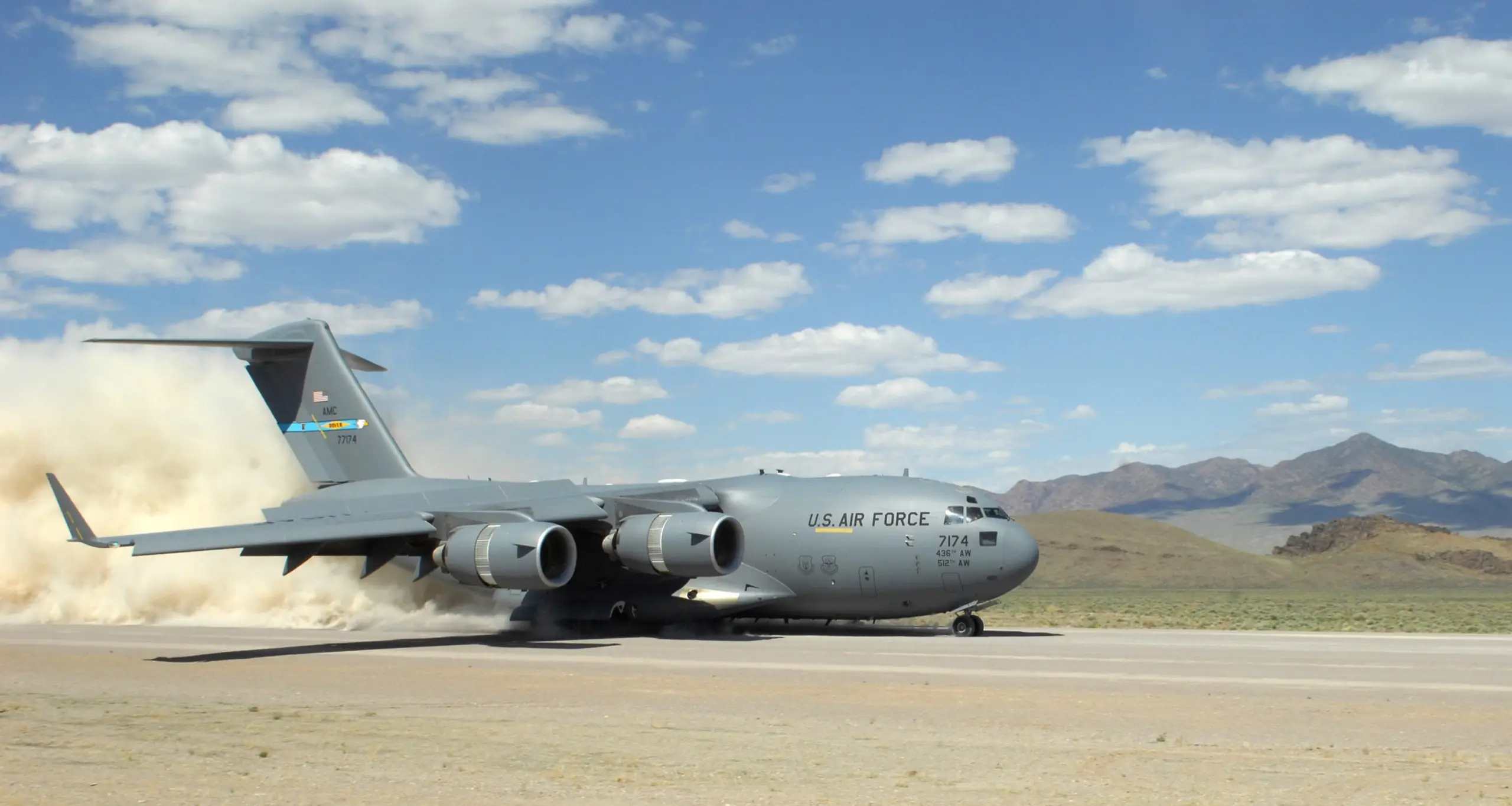
What the Air Force asked for, at the end of the Cold War, was an aircraft that could carry an Abrams tank across an ocean and then put it down on a dirt strip a few kilometres from the fighting. The C-141 Starlifter it replaced could do the first half, but needed a long, smooth runway. The Hercules could do the second half with much smaller loads. McDonnell Douglas built a high wing with flaps that hang straight in the engine exhaust, thrust reversers that let the aircraft back up on its own, and a cargo floor 26 metres long and wide enough for two rows of vehicles. The first one flew on 15 September 1991. By January 1995 the first squadron at Charleston was ready, and before the year was out C-17s were landing NATO peacekeepers at Tuzla in Bosnia.
Since then it has been the aircraft that turns up when something has gone badly wrong. It dropped bundles of water to displaced Iraqis in 2014 and flew supply pallets into remote outposts in Afghanistan for a decade. It landed on the sea ice at McMurdo in 1999 and has flown the Antarctic run every season since, including the first landing on the continent on night-vision goggles. Fitted with stretcher racks and oxygen, it carried the wounded home from Balad and Bagram. In August 2021 one of them left Kabul with 823 people in the back, the largest load any C-17 has ever carried, and the crew were decorated for it.
Other countries wanted it too. Britain, Australia, Canada, India, Qatar, the United Arab Emirates and Kuwait bought their own, and twelve smaller nations clubbed together to buy three and fly them from a base in Hungary with mixed crews. Boeing counts about 275 in service around the world. The United States flies around 220 of them from Alaska to South Carolina, and Boeing has signed up to keep the whole fleet flying now that the factory is gone.