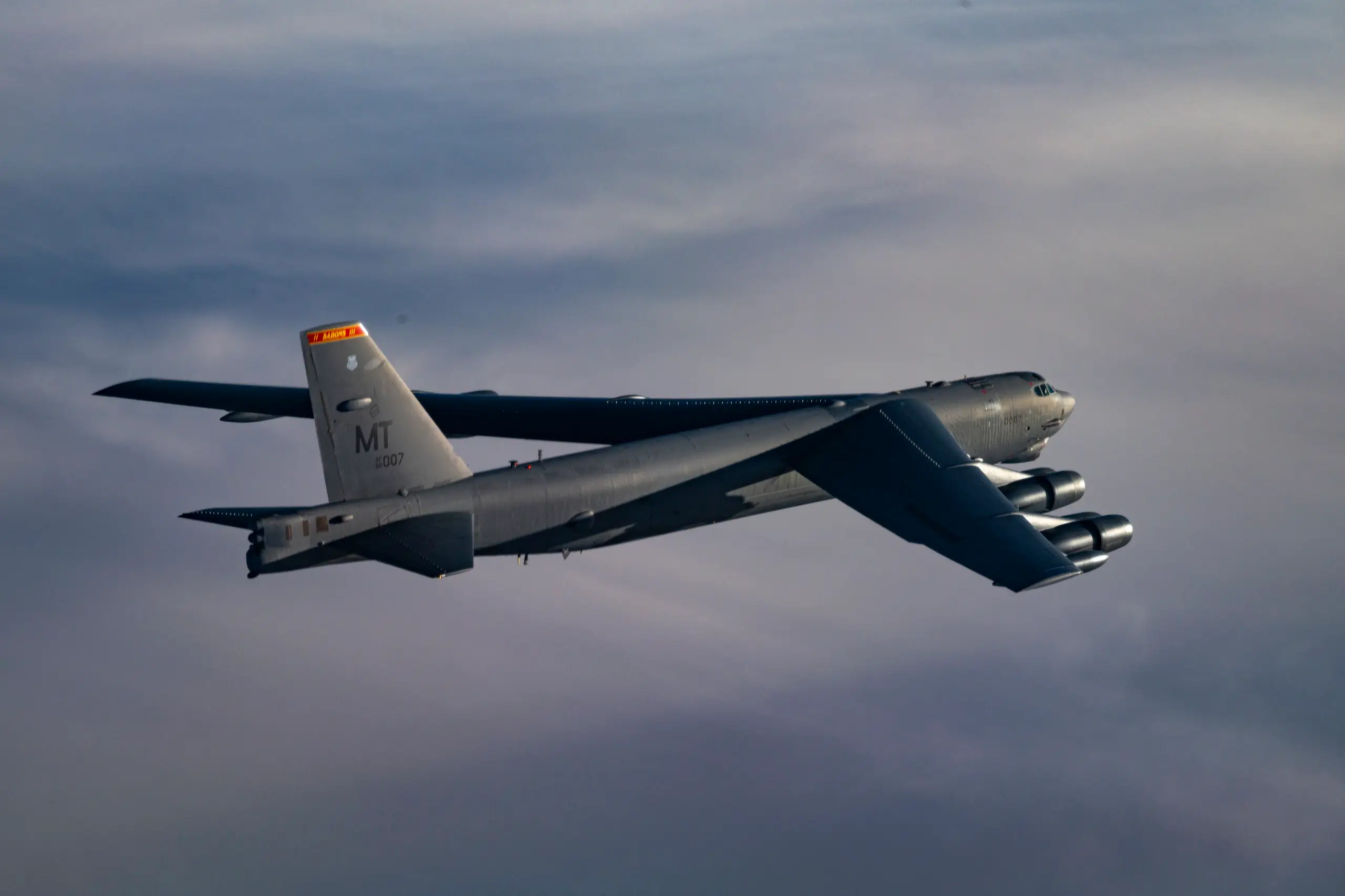
The YB-52 lifted off from Boeing Field in Seattle on 15 April 1952, with Harry Truman in the White House. The last B-52 left the factory in 1962, and every one flying today was built in those final two years. More than seventy years after that first flight the Stratofortress is still on the front line, and the US Air Force plans to keep it there into the 2050s.
It was designed for one Cold War job: carry hydrogen bombs from America to the Soviet Union and come back. The shape still says so. The wings span 56 metres, swept back and drooping on the ground, with eight jet engines hung in pairs beneath them. For years some B-52s flew around the clock with nuclear weapons aboard, so that the other side could never catch the whole force on the ground.
The B-52 never stayed in one role for long. In Vietnam it dropped conventional bombs on jungle targets, and in December 1972 it went north to Hanoi. On the first night of Desert Storm in 1991 it flew a secret 35-hour mission all the way from Louisiana. Over Afghanistan it circled above troops for hours, dropping single precision bombs on call. In between it carried rocket planes aloft for NASA and played itself in the movies.
It has lasted because it is big, strong and roomy, and nobody has found a reason to stop filling it. It can carry almost every weapon the US has ever made, and the inside keeps being renewed: new radios, new targeting pods, and soon new engines and a new radar. Crews call it the BUFF, and they say it with affection.
The fleet now numbers 75 jets, old enough that grandsons fly the bombers their grandfathers flew. Two of them spent years retired in the Arizona desert before being flown back into service.