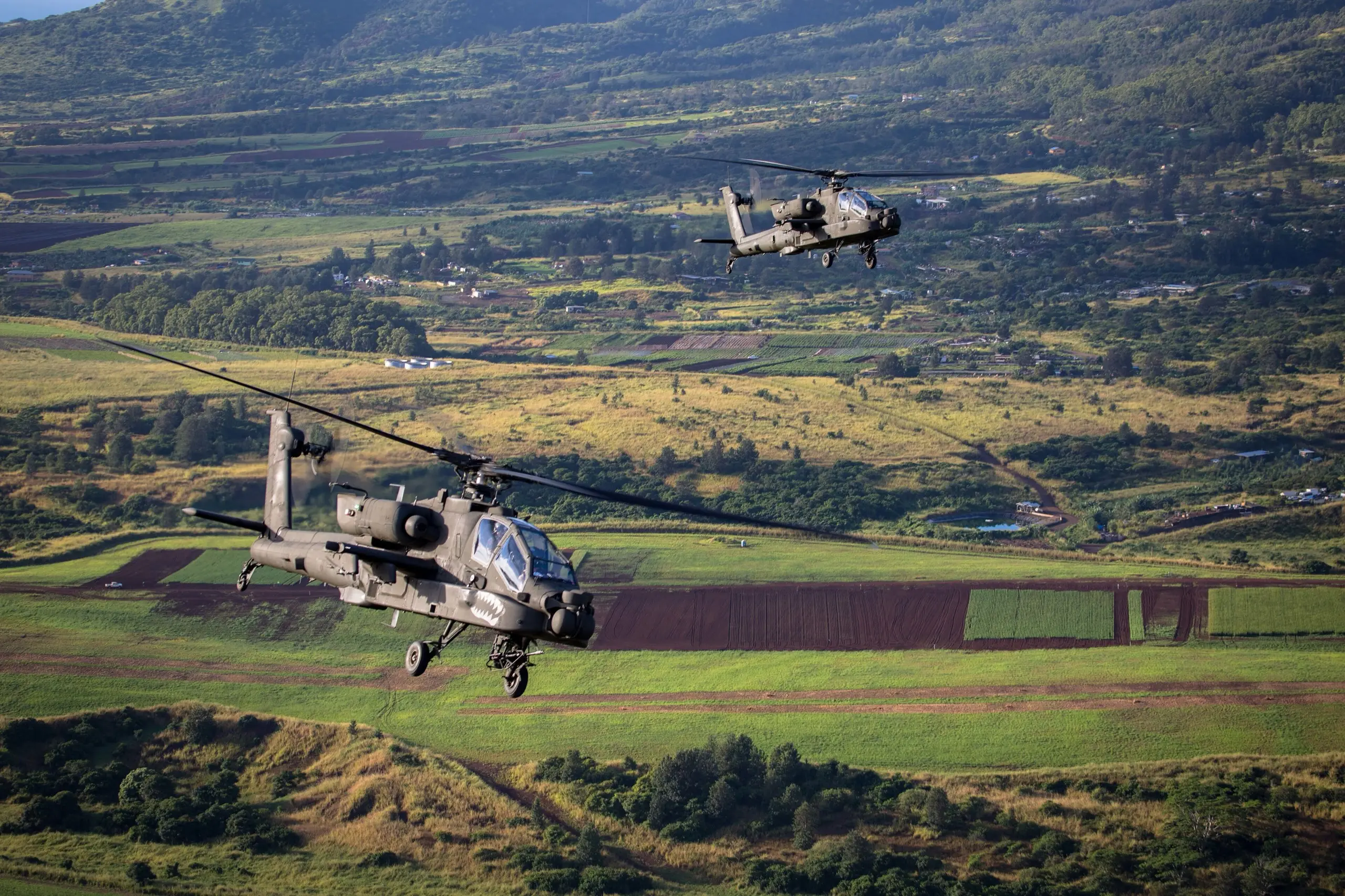
Here’s the thing about the Apache: it was built to hide. Not in the sky — in the landscape. It flies a few metres above the ground, slips behind a treeline, and raises just the top of its rotor mast above the leaves. Up there sits a radar that can sort hundreds of targets in seconds and pick the 16 that matter most. By the time anyone works out where the shot came from, the Apache has already dropped back out of sight. It isn’t a fighter jet. It’s an ambush that can fly.
The US Army ordered it in the 1970s for one terrifying job: stop waves of Soviet tanks rolling into Western Europe — at night, in bad weather, with nobody coming to help. So Hughes Helicopters built a flying tank-killer: armor around the crew, blast shields between the two cockpits, a 30 mm chain gun under the nose and up to 16 missiles hanging from stubby wings. It first flew in 1975. Half a century later, it’s still in production.
Then there’s the helmet. The gunner wears a monocle — yes, really — a little glass screen over the right eye that projects infrared video and targeting symbols. The gun is linked to it, so wherever the gunner turns their head, the gun turns with it. Look at the target, put the crosshairs on it, squeeze the trigger. Science fiction in the 1970s; standard equipment for forty years.
And it’s been busy. Its first war was Panama in 1989. Its most famous night was January 17, 1991, when eight Apaches crept into Iraq and fired the opening shots of Desert Storm. Since then the fleet has flown more than 5.3 million hours — over a million of them in combat — for 19 countries from the Netherlands to India to Australia.
The latest version, the AH-64E Guardian, keeps learning new tricks. Its crew can take control of a drone straight from the cockpit, and in 2026 Apaches started shooting drones out of the sky. The old tank-hunter has become a drone-hunter — and nobody seems to have told it to slow down.